
This had to be written (here’s why)
I come from a world where people don’t age well.
A world of punks, activists, radicals, and assorted riff raff. Where the layers of limiting belief (“only trust fund kids don’t have to work”) and politics (“you will never know freedom under capitalism”) are layered so thick, the highest aspirations are a “comfortable” non-profit job, or selling t-shirts on Etsy.
A world where people will run their whole life into the ground just to “keep it real,” ending up 50 and living in a shack managing the community garden.
A world where the opinions are big, but the thinking is small. Where the ones who “win” only maintain that illusion against a backdrop of all the people around them who have lost even worse.
It’s easy to feel like you’ve won when you only play small games. This is for the riff raff who have realized playing small never ends well.
Who am I
I’m a convicted “eco-terrorist.” A felon. An ex-con. On every government terrorist and watch list.
No college education. No skills. I’ve had a “real job” fewer than 18 months of my life.
I was varying degrees of “homeless” for the first half of adulthood. I subsisted on food from dumpsters. I hitchhiked the country. I shoplifted from Whole Foods. I lived on $2 a day.
I grew up with no models of success. No resources. No family money.
I absorbed decades of punk rock ethos around “eat the rich.” Over 99% of the people I’ve known have zero hope of not working until they die.
And I escaped it all, going from destitute to retired in six years.
Who this is for
This is for the riff raff.
The punks, activists, anarchists, and assorted “radicals” fed a lifetime of defeating beliefs, now finding their fashionable, subculture-approved paradigm isn’t aging well.
Mostly, this is for friends I see approaching (or in) middle age. All fed a script of what is and isn’t possible, trapped in an identity that once served and now constrains, plagued with an ever-loudening voice in their head that says, “it wasn’t supposed to end up like this…”
If that’s you, here’s what I figured out: Most of what you’ve been taught was planted in your head by miserable people who did not have your best interests in mind. And because things didn’t work out for them, they wove a tapestry of excuses disguised as “politics.” And this belief system was masterfully engineered to make them (and everyone) feel good about doing just about everything wrong.
Hopefully you have yet to drink that entire cup of Kool Aid. There’s still time for you to have it all, “keep it real,” and come out victorious over both the dominant culture you despise, and the counterculture you remain beholden to.
Your convictions don’t need eradication. Just modification. A few weeds pulled from the garden.
If you only want a ridiculous story with a “come from behind” arc, you’ll get that here. If you’re a Normie Civilian just looking for actionable insights on “retiring young,” you’ll get that also.
But that’s not who this is for. This is for the aging punk at a basement show in Olympia, looking around the room, counting six peers with “smash capitalism” patches, and wondering why life hasn’t worked out well for any of them.
The anarchist managing the local food co-op, so proud of “staying true,” while trying not to think what this life will look like in 10 years.
The “indie writer,” repackaging his tired schtick for 20 years, slipping into ever-greater obsolescence, knowing there’s no future in this, but is in so deep he can’t find his way out.
If this connects, keep reading, because I’m one of the few who escaped.
This is for anyone with a suspicion they’ve invested a lifetime into listening to, and surrounding themselves with, losers.
For years I listened to them. And it almost cost me my life.
Militant Unemployment: The Early Days
At 18 I committed to never work again.
While most optimized their life for comfort, or “the future,” I optimized for adventure. I was going to see it all, do it all, and sell my time to no one.
Instead of living for cheap, or finding a “hustle” to live comfortably, I chose a third option: Exiting the monetary system completely. The premise was: Whatever I needed, I was going to steal or scavenge.
I unpacked this in a Socratic fashion. Survival is sustained by three things: Food, clothing, shelter. Thus, identifying loopholes to satisfy each—without paying— would render money obsolete.
The rough blueprint went like this: Find an abandoned house to live in. Dumpster dive food from stores in wealthy neighborhoods. Shoplift the rest.
And for anything else—utilize a patchwork of scams and survival skills cobbled from punk zines like Cometbus and Scam. Would it work?
Upon graduation, my dad gave the ultimatum: School, job, or move out.
I drew my sword and became a pirate.
Suburban Jihad
I wouldn’t have wanted the early days to be easy. I moved into my first abandoned house, which was promptly burned down by neighborhood kids (revenge for me stealing their drinking spot). The football team’s storage trailer at my old high school was next (clearly unsustainable). And locking myself in the pool restroom at the luxury condominium complex to sleep lasted about seven hours. Then people started knocking.
So my girlfriend and I hit the streets. Two teenagers, with a stolen crowbar, in the second wealthiest zip code in the state. Too naive to know that no one leaves seven-figure houses abandoned.
Weird thing was, it took us about an hour to find one. Two stories. Waterfront view. On the same street as Microsoft co-founder Paul Allen. And totally abandoned.
I moved in and lived there rent-free for almost two years.
They said it couldn’t be done, and this is where I learned a lesson—without which everything that followed would have been impossible:
“The greatest superpower is being so ignorant that you don’t know something can’t be done.”
What you don’t “know” is impossible, becomes possible.
Hold that thought.
Under the radar, above the law
With this, the Militant Unemployment Experiment was launched.
The world became my playground. Specifically, the part called “the wealthy suburbs east of Seattle.” A world where, if you dress the part, no one will notice you pilfering buffets at the most decadent weddings, joyriding golf carts at the most exclusive courses, and reading lockpicking manuals poolside at the most expensive condominiums.
Every night I retreated to my suburban palace, gazed dreamily across the lake at the Seattle skyline, and told myself: Forever this, or die trying.
“A taste of freedom can make you unemployable.”
I was never going back.
Raid
As the Militant Unemployment Experiment expanded, I stepped up recruitment efforts beckoning my W2 friends to join me. And my efforts worked too well: The abandoned house hit capacity at six full time residents. Only common denominators: All vegan, and no one did drugs.
The Militant Unemployment Experiment was now a well oiled Militant Unemployment System. For a minute, it seemed anything was possible.
Enemy forces had other plans. The problem with being criminals in a crime-free zip code is that when the police inevitably get around to enforcing crime, you’re the only one to arrest.
Who knows what happened, but one night they raided our house.
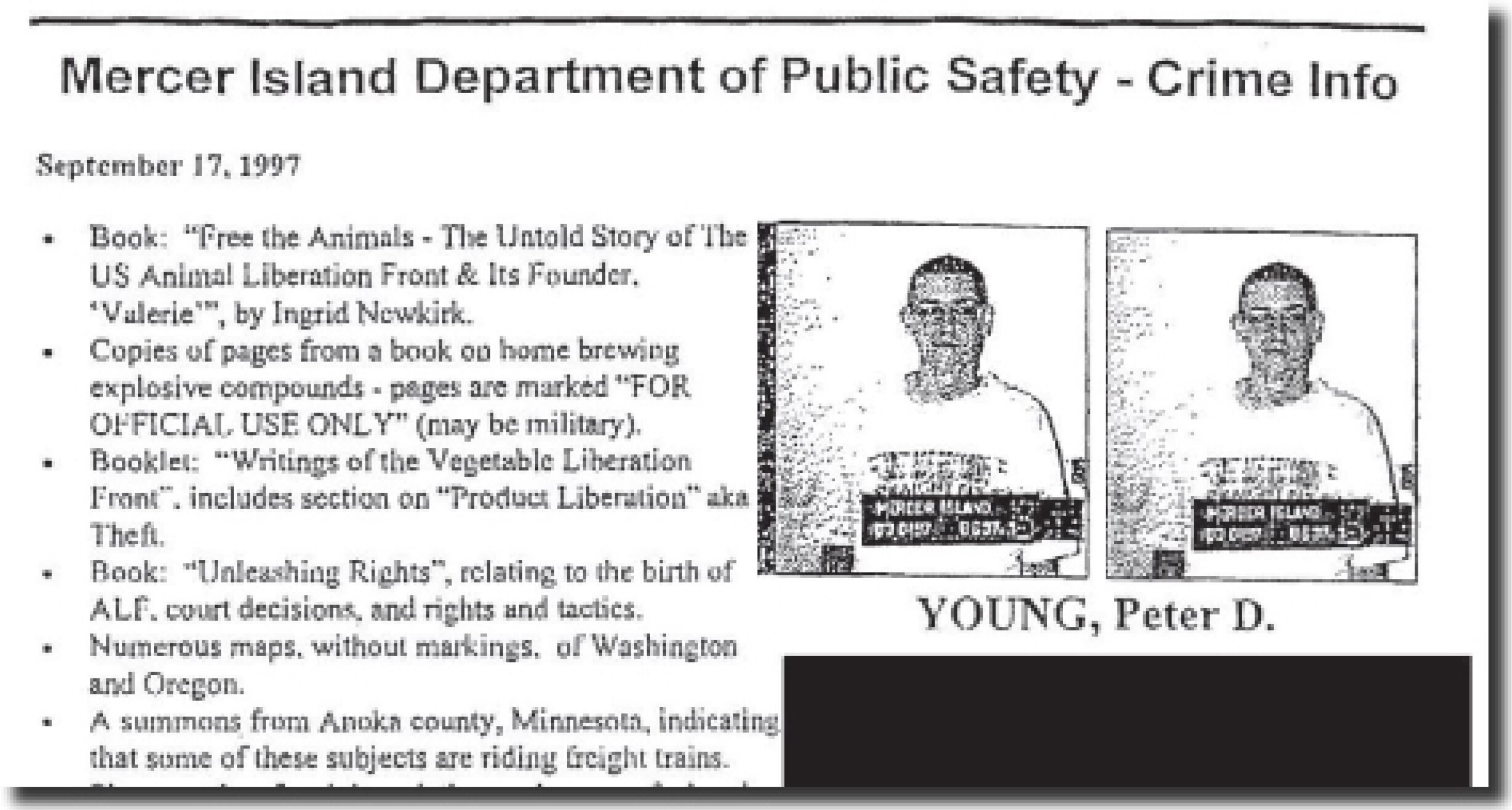
We never even saw the Seattle Times article headline two days later that read “Activists Are Arrested As Squatters.” We didn’t see it, because we were all in jail.
Buried in the article was a foreshadowing of the next phase, a mention of police searching our home and uncovering “animal liberation documents.”
For two years, being an outlaw had won my personal freedom. But an escalation of purpose was in order.
Now, I would become an outlaw to win freedom for others. At scale.
Vegan vigilantes
We raided six fur farms in two weeks. When it was over thousands of wild mink and foxes were out of their cages, and the FBI was out for blood.
They charged us with “Animal Enterprise Terrorism.” Damage estimates: mid-six-to-seven figures. Maximum sentence: 82 years.
They had an indictment, but they didn’t have us…
My transition to fugitive life was almost seamless. I was already living off the radar. Just needed to obtain a new ID with forged documents, and never call my parents again (done and done).
When I walked out of a DMV reborn as “Simon Zimbal,” I could resume my suburban pirate life anywhere I wasn’t recognized.
As long as I didn’t get fingerprinted…
The fugitive years
Hitchhiking. Freight trains. Sleeping on rooftops. 48/50 states. And shoplifting. A lot of shoplifting.
In Chapel Hill I lived inside the UNC clock tower, infiltrating dining halls, and living undercover as a “student.” In Oregon, I occupied an abandoned boat. In Silicon Valley, I lived inside the illuminated sign atop Whole Foods. If the FBI took me down, I was going down with stories.
Every crime, every day I survived on $0, and every glorious moment contributing absolutely nothing to society, obscured whispers of a mounting cost—increasing layers of fortification against the possibility of me ever not being a middle aged Uber driver, telling stories of his wonder years long since passed. Front-loading my life with adventure, certainly I would pay for it on the back end.
Entering the second half of my 20s, even as a proud outlaw, I knew being a professional shoplifter and dumpster diver could not age well.
The world had mocked me for my “never work” stance, and their vindication was all but assured. All they had to do was lean back and look at their watch. My downfall was inevitable.
Then I got arrested
Surprising no one, I was arrested for shoplifting at a Starbucks.
Headlines read “Man arrested on terrorism charges.” For eight years, the world’s most powerful investigative agency had failed to find me. I had made them look stupid. Now it was payback.
My maximum sentence on the mink farm raids was 82 years. Due to sentencing guidelines, lawyers told me to expect a minimum of 12.
The rest of the story was all but etched into stone. A professional adventurer with no skills or employment history emerges from prison at 37. His best days behind him. Carves out a few months as an Uber driver before they learn he’s a felon. Gets a data entry job at a non-profit who takes him on as a pity hire. Coasts to the grave in a studio apartment, singing sad songs about his glory days…
My lawyer pulled a Hail Mary move and got me two years. I’d be out by my 30th birthday
The prison years
Federal prison was like living with hundreds of scarecrows to warn you of what would happen if you don’t adapt. Every person had done a dozen trips through county jail before landing a 30 year sentence in the feds.
Of my outlaw past, I regretted nothing, and I would rebuke nothing. But a pivot was in order—from the punk rock criminal life, to… something else. I would never let them win. But there’s an old outlaw adage: “Sometimes you must obey smaller laws, in order to break larger ones.”
The pivot would be as small as possible to maximize freedom while avoiding prison. I had two years to plot.
I squandered almost all of it. I remember reading Investing For Dummies and How To Start An Online Business. So you could say I was making an effort.
One day Luxury Jones (hip hop name) called me into his cell. “You’re different than these other guys. You need to read this.” He hands me a book: Awaken The Giant Within by Anthony Robbins.
Few born after 1985 know who Robbins is. Just imagine an avatar of 80s “motivational speaker.” Then imagine that image AI-optimized for maximum cheesiness. That is the place Robbins held in the popular psyche for most of the 1980s and 90s.
Close to 0% chance I would read his book. Robbins transgressed every qualification for credibility in my punk rock paradigm. He was wealthy. He wore a suit. He starred in infomercials. Then he catapulted beyond eye-roll status to straight up demonic by teaching that most responsibility for the outcome of one’s life is not the fault of capitalism or inactionable, nebulous forces, but on their decisions and communication skills. Thanks Hitler.
Luxury Jones started to bully me about the book. No overt threats, just circling by my cell daily: “You read it yet?” Eventually, me saying “no” would have consequences.
So I read the book. And somewhere in the distant recesses of my brain, a small domino fell.
I already knew the world I came from was populated by image-centric, grandiose opinionators who were scared to take real risks and couldn’t tell funny jokes. But I kind of assumed that was 99% of people. And at least in my subcultures, the people were “well-intentioned” and had “cool politics.”
Robbins’ premise—sheer subcultural treason for me to entertain—was that the quality of your life was the quality of your decisions, and your decisions were based on beliefs, and almost no beliefs were objectively true and could be rotated at random (you could find “evidence” to support almost anything). Thus, our destiny was entirely malleable.
By placing every misfortune outside your control, you gave “them” total control. A wholesale surrender that cast my “subversive counterculture” as the opposite of subversive—a culture of total head-bowed submission.
The subculture of my origins began to look like a carefully tailored web of belief, where every bad thing was the fault of some other bad thing. Something so perfectly tailored for failure, it was like elite level loserdom craftsmanship.
As my release date approached, I quickly gave away all my books. No one on the outside could know what I’d been reading.
So I got out of prison and here’s what happened
Prison gates opened, I had my “prison release” party at the Los Angeles home of one of the child actors from Home Improvement, and then the reality thing kicked in.
I had no plan. No resume. Felony survival tactics off limits. And I wasn’t getting a job unless the only alternative was prison. Which it was, because that’s how federal probation works: you have to work “full time,” or go back to prison.
Meanwhile, I cashed in a couple pre-prison debts. Accepted a couple “get back on your feet” donations. Sold a few records from my collection. And I cobbled together about $1,000. Between living out of the Trader Joes dumpster, and my very negotiable rent arranged by sympathetic friends, I could make my $1,000 last six months.
Instead, here I was: legally compelled by probation to participate in a manmade horror beyond all comprehension. I would have to get a job.
It was at a dog day care. I don’t want to talk about it.
Picture me slumped in a white plastic lawn chair, in the corner of an astroturfed courtyard, parceling out dry kibble to a pack of poodles. Isn’t this how they tell you the story always ends? The man who shakes his fist at the world and defies its demands always finds himself humbled by the System pummeling him into the inevitable fate of everyman mediocrity.
It’s not the one who laughs longest, but the one who laughs last. And I wasn’t the one laughing.
My hubristic plan to avoid working
I hatched a scheme so absurd, it could only come from a desperate man. It went like this:
As a former “political prisoner,” I received regular university speaking invites. Most were free, but a few paid.
At my next probation meeting, I delivered a pitch: Allow public speaking to be my “job,” fulfilling probation’s “full time employment” mandate. Somehow, my probation officer went for it.
So I went on tour. Harvard, Amherst, Sarah Lawrence… Speaking at schools about prison and breaking the law, and submitting honorarium check stubs as “proof of employment.”
My speeches were 60 minute promotional pitches for criminal activity and “eco terrorism.” Not only was I getting paid to promote crime, the federal probation office was accepting it as “full time employment.” The system was broken, and I was exploiting its most hilarious loophole.
This was an old lesson, relearned: You won’t get from life what you don’t ask for. The panhandler who asks the millionaire for a dollar might have gotten $1,000. But he didn’t ask. Mental note, retaken: Always make absurd requests.
For the moment, I was free…
Post-probation reality disorder (the hot tub shame scene)
My one year probation ended, and things regressed.
Roadying for bands. Crossing the country on a whim. Road trips with strangers. It was a dangerous storm of no obligations, near-zero cost of living, and endless amounts of empty calories “fun.”
Reverting to pre-prison, felony-lite shenanigans was not an option.
One weekend I was flown out for the premier of a small film I had a cameo in. Driving my date to her return flight, we killed an hour sneaking into the hot tub at the nearest four-star hotel. A man— clearly of means—got in and asked what I “did.” I didn’t have an answer.
“Well how do you support yourself?”
I didn’t have an answer to that either. I didn’t really know. Survival was a mosaic of disconnected, inconsistent micro-income sources. Selling used items on eBay. A random speaking event. Bootlegging out of print books.
“You don’t know how you support yourself?”
I looked over at my date. She gave me an expectant look that said “Say something and spare me this humiliation.”
In my mind, I was a man making moves. On the “come up.” A temporarily detoured pre-success story. Dozens of plots and schemes concurrently in motion. The culmination of my genius may not currently be reflected on my tax returns, but my success and permanent exit from the work-buy-die slavestate was inevitable. Just needed a little more time. I was 33.
“It’s… complicated.”
What else could I say.
“How old are you?” he said.
See above.
“You’re 33 and have no plan? Better figure that out.”
Better figure that out.
And that’s when I learned it doesn’t always matter how badly you want it. Sometimes desire only crystallizes through shame.
Never saw the girl again.
Engine failure, rapid descent, brace for impact
Shame is great leverage, and my new shame-induced plan, as I remember it, was to “research” until I hit the Big Idea. The elusive no-startup-capital, “get rich quick-ish” business.
In practice, this meant avoiding any actual action by scribbling hundreds of pages of notes from dozens of books and brainstorming sessions. I tore through the obligatory entrepreneur “starter pack” books like The Four Hour Work Week, and waited for my Big Idea.
My notes from this era are a collective cry for help, a scattershot bouillabaisse of internet business ideas with viability unsupported by any actual math or research.
For an entire year, I mucked around in the swamp of amateur business ideas favored by 99% of all 50 year old Uber drivers who “tried to start a business once.” Print on demand skateboards (built site, never launched). Vegan t-shirts (kill me). Ebay to Amazon price arbitrage (averaged $3/hour).
I’d built a life on shortcuts. Tell me to get a job to get money to pay rent? I’ll just find an empty house. Tell me to pass legislation to end a cruel practice? I’ll just go to the farm and free the animals myself.
Now I had entered a domain where shortcuts were punished. And I had no idea what playing by the rules looked like.
Dime store gladiator enters the styrofoam arena (next stop: noose)
I got as far as launching SoyMilkStore.com, your source for “affordable soymilk makers.” “Monetize your passion,” they said. I arranged drop-shipping accounts, took out a print ad in a major publication, and ran Google ads. I lost about $600.
This is where I learned a lesson that I wasn’t ready to apply: Glory will only be found outside your comfort zone. “Doing what you know” limits you to getting some variation of what you’ve always gotten.
Months before, I’d sold my new girlfriend on this “aspirational soy milk mogul” dream. Supportive in the way few had been, she’d covered 75% of our rent.
Maturity could have inspired me to address this business failure with her directly, tackle the setback with humility, practice open communication, and offer a practical array of mutually beneficial solutions.
And critics might say this was time to abandon my “no employment” commitment. That it had gone too far, and was now impacting others. That it was time to get a job.
I did neither. Instead, I ran. Backwards. Exactly 15 years backwards.
The humiliation ritual of merely existing
I moved back into an abandoned house. With six roommates.
It was a nice house. Centrally located. And unlike my last abandoned house from 15 years prior—it had all utilities. Lest anyone accuse me of not progressing.
My housemates were a checklist of hipster archetypes: The tattoo artist. The non-profit lackey. The cosmetologist. The DJ. The bartender.
And then me. The “tortured artist” cliche, who everyone humors but no one believes, emerging nightly from his 7’ x 12’ basement room to float his next internet business idea to anyone who will listen.
Now in my 30s, with my free rent and nearly unbroken streak of unemployment, some might say there was glory in such a long run without surrender.
But it’s a fine line between “keeping it real” and “pathetic loser who won’t adapt.” And I was in the early stages of wondering if I was on the wrong side.
Taking stock of our pathetic protagonist
Let’s recap:
- Early 30s.
- Living in an abandoned house.
- Felon.
- Unemployable.
- Unwilling to become employable.
- Unwilling to be employed.
Viewed on a day by day basis, everything was good. My rent was free. Lots of friends around. But for the first time, I was looking at where this train was going. Three years down the road. Five years. Beyond.
I remembered something from the Robbins book:
The worst kind of discomfort is the kind you can live with.
Just bad enough to make you unhappy, not bad enough to inspire action.
At this point I’d read over 100 books on making money outside of formal employment. Knowledge wasn’t the issue. It was becoming clear that “discomfort,” or some variation of “hitting bottom” was the missing ingredient.
Then the FBI raided our house. Twice. In four months. And my name was on both warrants (something about an animal laboratory raid in Iowa 5 years before, and some other thing). As the new roommate bringing heat on the house, my welcome was rapidly fading.

If you want to take the island, burn the boats
I hit reset.
My girlfriend and I moved far away. To a city where we knew no one. And I went on mission-focused lockdown. As for what awaited me on the other side, nothing was off the table–except getting a job.
I went all-in on the only business I’d tried that I hadn’t lost money in: Selling used books on Amazon.
It was something I’d picked up from a magazine in prison, from a story of a man making six figures sourcing books from places like estate sales. You download an app that tells you what books are worth, scan the barcodes, and pick the profitable ones. Buy low, sell high.
So I spent my days driving around, finding cheap used books, and reselling them on Amazon. My biggest source of inventory was a library dumpster.
For the first time (legally), I had a “middle class income.” I had a two story condo, and even more exotic—a car. First one of my adult life. None of this was particularly interesting to me except that I succeeded in cheating society of its biggest threat: “Get a job or die.”
My girlfriend, however, wasn’t so supportive. With her private university English degree, she watched me circumvent the prescribed path, and quickly be making more money than her. I think she saw me as a reminder she may have wasted four years.
One day we got in her car. She picked up a crumpled paper left on the console. My ATM receipt. I should not have left it there. She stared at it for a moment, then unleashed—
“I have a FUCKING DEGREE and I have ZERO DOLLARS. How do you have MORE MONEY THAN ME.”
With that outburst, I knew I was on the right path. And with the wrong girl (I left her).
The middle class experiment (five-figure income is the cousin of death)
I doubled down on the used book thing and was soon on the extreme low end of “upper middle class income.” The allure of this tax bracket, as I understood it, was living “comfortably” while also “saving for the future.” Buy a house, contribute to something called a “401k,” and build your “nest egg.”
A year into this “middle class” thing, I did my taxes. When the smoke cleared on my 12 months of 35 hour work week’s (with rent as my only lifestyle upgrade), after all life expenses, I had a profit of $20,000. One year of my life, exchanged for $20,000.
I quickly did some math on this “middle class dream” I was apparently living. At $20k profit a year, I could work 15 years to pay for a “good” home that would wipe out 15 years of work and bring me back to zero. Or get a mortgage that would turn a $300,000 home into a $1m home when all interest was paid. And only at that point could saving for “retirement” start, taking another 15 years to achieve an “average” retirement savings. Which was still too small and left most struggling in their twilight years.
Back when I was poor, I had my time, I had friends, I had adventures. Eighteen months into “middle class,” I had almost no time, and a trivial amount of money left over for the sacrifice. It was treading water in service to a supposed “ideal,” with zero upside.
The math didn’t lie: Middle class income is the biggest scam of all. I was worse than poor by almost every measure.
For over a year I had lived the American ideal. I could now credibly call it a huge waste of time.
Only the poor and the wealthy are truly free.
So selling used books—or any other “comfortable income”—was now off the table. A plan with no off-ramp. A “solution” that created the problem it solved. You wouldn’t read a book with unlimited pages. “Do this thing eight hours a day forever” was not a plan, it was a placeholder.
If middle class was a scam, I was at a crossroads: Return to voluntary poverty, or aim for an abstract netherworld beyond middle class, for which I had no reference points.
I’d been reliably told by various punk bands and wise white men with dreadlocks working minimum wage jobs that “there was no such thing as an ethical millionaire,” and the only people who exited the system “had rich parents.”
Down one road, the option of “poor but free.” And the other, “rich, but actually not because that’s impossible according to the white barista with dreadlocks.”
A cruel deadlock.
The secret society of sole proprietor sovereigns
In the meantime, I sold books. Every day I woke up with one mission: Drive around and look for books. The mission took me across state lines, to barnyard auctions during rainstorms, and weird warehouses off dirt roads.
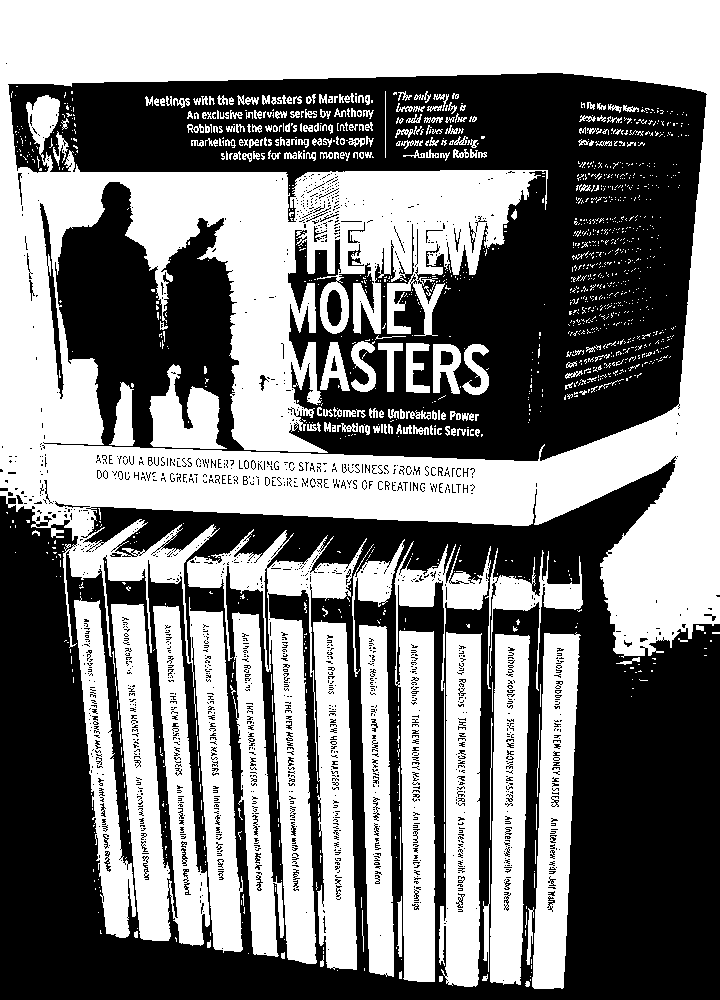
In one of these dark warehouses, commingled with dusty used books, I picked up a set of CDs in a black slipcase. And on the front, it was that guy again. Tony Robbins, whose book I’d been bullied into reading in prison. You couldn’t call it an audio book, just a 12 CD set of interviews titled The New Money Masters. Interviews with people who made millions on the internet.
It was selling on Amazon for $400. I paid $5.
On the drive home, I listened to the CD #1. An interview with a man who started a seven figure business selling an ebook on how to teach a parrot to talk. CD #2: Guy who made a cheap DVD on how to make a gun that shoots potatoes. On every CD, stories of people exiting the system by launching weird niche internet businesses with very little money.
I needed what was on these CDs more than the $400. I kept them.
This was just before the “internet guru” era. Before everything turned into a dancing monkey YouTube audience capture death spiral of quick-edited “how I made $$$ with this insane money glitch” stealth seminar pitch videos. The “making money on the internet” thing was still underground.
For the next month, I suffered a level of possession that would alarm any medical professional. I drove around in my used truck—often in circles—listening to the CDs. And when I got through all 12, I started over at Disc One. Repeat.
The interviewees had achieved my goal of financial sovereignty, and I hung on every word. Between them were zero college degrees or formal training. Just economic runaways who broke every rule of the day, built virtual pirate ships on laptops, and answered to none. They’d beat the system not just by “replacing their employment income,” but by condensing most people’s 40+ year financial timelines into a few months. CD #5 was with a guy who netted $1 million in a day from one weird idea.
When I wore out the CDs, I spun off into deep-internet spelunking for every course or training each interviewee had released. Hundreds of videos consumed. Dozens of late nights. Starbucks’ liberal loitering policies abused.
When my maniacal binging was done, I had a lot of notes. Among these “early retirement” success stories, I isolated two common denominators:
- All used either a recurring revenue model or “product launch” model. “Recurring revenue” was a subscription model business where you make the sale one time, but get paid repeatedly on a recurring basis (usually monthly). The “Product Launch” model was creating a high-ticket digital product, then turning the release of it into a limited time event, often generating more profit in a day or week than most make in a lifetime.
- All their businesses were scalable. The work and capital required to operate was not directly tied to revenue. A zero to marginal increase in labor or resources was required to accommodate new customers.
My big “exit” from the middle class now had a rough road map.
The Freedom Framework
I was learning that most “set for life” money is not from income or business revenue. It’s from investing in a business that grows in value, then selling it for a giant sum. And there were some businesses that sold much more easily and at much higher valuations than others.
So one final filter had to be applied. The business I launched needed to be sellable (most businesses aren’t). It needed an off ramp. The opportunity for a Grand Exit. I.e. selling to the highest bidder for a huge payday. After which, I would never have to work again.
This didn’t need to be the last thing I ever did, but it needed to be the last thing I ever had to do.
We’re getting deep here, but these were the things I read about in the college library on Friday nights.
Business buyers really liked “recurring revenue” (discussed previously), because it meant future revenue was predictable and steady. And they really liked businesses selling products built with bits instead of atoms (e.g. computer code versus rubber or plastic).
All of this intersected at one totally bizarre business model. Something so outside my comfort zone, and so far outside my reality, the name for it wasn’t even in my vocabulary: “SaaS,” or “software as a service.”
It was a business barely whispered of on the fringes of entrepreneurship, but I was sold instantly. For five years I’d spent $30 a month on an app for my used book business. While known only in a tiny niche, the app had 1,000+ subscribers. I would look at this app and think, “the guy behind this ugly app makes $30,000 a month.”
The whole “SaaS” idea was that you pick a random business niche, identify a painful problem they have, build a tech solution for that pain (either by writing the code yourself, or hiring a developer), then sell it to those businesses on a monthly subscription basis. This, so I was hearing, was the Holy Grail of business models.
It was also among the hardest. But on the other side of insane technical and operational challenges, so I was reading, was predictable recurring revenue, and the ability to sell your business at a very high multiple of its annual revenue.
(The viability of business models changes often. Models come and go. It was SaaS then, maybe there’s something better today.)
My most advanced technical skill was picking locks. I never even understood enough HTML to bling out my 2007 Myspace page. I wasn’t just technically untrained, I was technically inept.
But when desperation meets “realistic”—desperation wins. I was very, very desperate.
I was also 35. This was a halfcourt shot at the buzzer. It had to work.
Your Exit Number (North Star for the runaway slave)
How much do you need to never work again?
What follows is the formula I followed to arrive at that number. For anyone reading for the narrative—this part will be boring. For anyone wanting to map their own exit—this part will be the most important.
I saw business not as a break from my “adventurous youth”—but as the only way to maintain it. I was in an existential quest to preserve the Self. Looking into the lifeless eyes of every friend who submitted to W2 servitude was my “scared straight” program. Sometimes, you need to do grown up things in order to stay young forever.
So I needed to figure out my retirement number, hit it (legally), and return to what mattered most: agitation, adventure, activism, and doing lots of dumb things just so I could say I did them.
If you don’t have a target, you’ll never hit it. To me, this “never have to work again” number was the only number that mattered. A North Star. A number to obsess over. A number to reverse-engineer a path to. Then advance upon at all costs.
Here’s how most calculate their “retirement” number (the few who entertain the thought): Decide how much they need to live on per year, estimate how many more years they expect to live, then multiplying the first number by the second number. But I learned that number is always too high.
This is where I read about something called “The 4% Rule.” This rule has critics (I’ll address that in a moment), but it goes like this: You will probably never run out of money if you can live for one year off 4% of your liquid net worth.
Example:
- You need $5,000 a month.
- That’s $60,000 a year.
- Multiple x25 (making $60,000 4% of the result)
- Your “never work again” number is $1.5 million.
The reason this (usually) works is that you can stick your cash in a very novice investment portfolio (no experience required) and expect it to grow about 8% per year. Inflation eats up about 3% of that (on average), leaving a little room for emergencies or volatility. 4% is generally a safe amount you can cash out of those investments annually and never run out of money.
The 4% Rule is good enough for most. But here’s where I yielded to the critics, and aimed for a more conservative number… The bigger the gap between your retirement age and death, the more likely the 4% Rule will fail. In my mid-30s, I had to budget for 50 years of retirement, vs 20 for the average person. Two, even with a “normal” retirement age, the success rate for the 4% Rule was 92%. I didn’t want “good” odds. I wanted bulletproof odds. When I declared an exit from the system, I needed my retirement to be immutable.
So I (somewhat arbitrarily) settled on a 2.5% Rule. Figure out my desired annual income. Multiply times 40. And with this conservative withdrawal rate, chances of never running out of money increased to 99%+. Only chance of dying broke at 2.5% is total global economic collapse.
Everything I did going forward would be for this two-part North Star:
- Paid off house
- 40x annual income conservatively invested (aka 2.5% Rule)
A bulletproof exit from the system.
Reverse engineering retirement
Now I had an Exit Number. What’s the path to get there?
At 35, I was on a rapidly descending plane moments from impact. The younger you are when you start, the more aggressive the risks you can tolerate. There’s time to recover. At my age, I was forced to iron out as much uncertainty from the plan as possible.
I needed a predictable path to my Exit Number. Here was the formula I used…
Software businesses (like the kind I planned to start) can sell for many times their annual pre-tax profit (in layperson terms, or “EBITDA” if you’re into jargon). There’s no universal way to value a business. But if you take that “profit,” it’s reasonable to expect to sell it for at least 4x that amount. It’s often less, and very often more, but 4x is a conservative-leaning estimate. This was my Exit Number Blueprint Assumption #1.
From there, you can reasonably estimate revenue in a subscription software business by taking your average monthly subscription price, and multiplying times the number of subscribers, then multiplying times 12.
Let’s say my Exit Number was $5 million. And I had a tool that I could sell for $100 a month. With 1,000 subscribers, I could reasonably expect to sell the business for $5 million. This was Exit Number Blueprint Assumption #2.
(Overly simplistic math here. Doesn’t factor in expenses, or taxes on the sale. But accurate if we assume I put a percentage of the revenue before the sale into my pocket to offset those hidden costs).
So now I had two numbers:
- Exit (“never work again”) number.
- Subscriber target number.
If I came up with an idea I could charge $100 a month for, all I needed was to hit the target subscriber number. I now had a hyperspecific “do or die” target, a single number to obsess over. Every day, from morning to night, I could rabidly pursue the goal of “1,000 subscribers.” With this singular obsession, the mission was laser focused—a simple battle cry to chant until victory.
And once achieved, sell the business and exit the system.
It was a plan that—before it was over—would crash, burn, explode, implode, drag me into the abyss of despair and ridicule, ruin every relationship, and bring rivers to flow with the blood of my broken dreams.
All I’m saying is, there was no way I was getting a job…

Aged-out (escape plan, contingencies for idiocy)
I moved to Boulder, a town with some of the highest rents in the country. My “apartment” was more like a crawlspace, with 6.5 foot ceilings, except pipes where the ceiling should be. I lived on Sorority Row, one block from the University of Colorado. Not only was I reminded every moment of my advancing age, but also my lack of resources. Step outside my college ghetto, and the median home price in my zip code was $1.1 million.
The idea was to put my back against a wall of spikes. Force myself into a cauldron of desperation, torment, and fiscal insolvency so I had no choice but to pull off this ridiculous “software” plan. Manufacture a circumstance where merely existing was an assault on my dignity (basement crawlspace), a shock-therapy reminder I was running out of time (the bleak age contrast of Sorority Row). And for good measure, make it impossible to afford (rent doubled while my used book revenue plummeted by 75%).
Maybe you’re never really “out of time,” but in my mid-30s, each falling calendar page landed like dynamite. Time left for repeated failures or long runways was limited. Whatever I committed to had to work. I had time for one plan, executed with the fury of a thousand Gods and the precision of a laser. No second chances.
I converted a corner desk in the University of Colorado library study lounge into my War Room. Ten years since my last round of going undercover as “college student,” I had concerns my approach was rusty. So I texted an expert for feedback.
“You’re where?!”
My NYU undergrad friend was not supportive.
“You’re 35. If I saw you in my library, I’d call the police.”
I moved the War Room to Starbucks.
High Risk, Low Reward—Inquire Within
I had been wrong about one thing. My failed “middle class experiment” wasn’t a total waste. It had left me with one thing: A small (very small) reservoir of startup capital with which to hire a developer.
On the subject of hiring, I’d pieced together two approaches, each having passionate defenders and detractors.
On one side, the “technical founder”—learn to code, build your own product, reduce your startup costs by 95%, and enjoy complete control.
On the other, the “non-technical founder”—outsource all development to skilled coders, speed up your time to market 100x, and free yourself to promote the business full time.
It wasn’t hard to pick a side. One thing that’s worse than being a 35 year old living on Sorority Row is being a 36 year old. Speed was a priority of existential proportions.
I shook a few branches of my extended riff raff social circle. Somehow, a few developers fell out.
Some highlights from our calls:
- “I need all use cases and a wireframe before considering.”
- “I’m looking to take on more serious projects.”
- “I don’t have any interest in this.”
I was learning the hard way that “I have little money and an unformed idea I can sketch onto a napkin for you” was not an appetizing pitch.
I bought Learn To Program, went to Starbucks, and settled in for a long winter.
Punk Detox (Addition By Subtraction)
One more step, before locking in on this “subscription software” business model, was some constructive bridge-burning.
Little of what I’d learned about business was intuitive or ”made sense,” but I was committed to remaining agnostic. If someone had achieved what I wanted to achieve, I would reject nothing they taught me. These people escaped the system, and I haven’t, so I hadn’t earned the right to argue. But there was one mandate I heard over and over that I would not accept.
“Everyone in your life who isn’t 100% supportive, is 100% liability and must be cut off.”
You are, they said, the average of the five people you spend the most time with. It is impossible to not become your closest peers. You absorb their assumptions and habits. Since you are in a fight for your life, if someone isn’t pulling you up, they’re keeping your down. And if they aren’t with you, they’re against you. They have to go.
Burn bridges with friends? This was cult behavior. But in all my studying, these critics and haters and “employee mindset” victims were spoken of in almost Biblical “good vs evil” terms, as demons who must be purged. Purify your life of low achievers, so that you may climb the staircase to edification.
Sounded insane, but I started to pay attention. Started noticing the subtle ways the Employment Cult tried to influence my behavior, and dissuade progress among not just me but everyone around them. It was as though they wanted to enforce conformity, so everyone was as miserable as they were.
You don’t realize how regressive your friends are until you start to change. And you realize most people would rather you suffer at their level than have success at a higher one.
“People don’t like it when you change, because the ways they control you stop working.”
From the hater class, I was hearing things like:
- “They’re lying. It’s impossible to be a millionaire unless you have family money.”
- “Those people just got lucky.”
- “You need a million dollars to start a business like that.”
- “You never meet self made people in real life because they don’t exist.”
When those didn’t work, the real toxicity came out.
- “You’re falling for a scam.”
- “Your privilege is showing.”
- “You can’t pull this off.”
- “You’re letting a bunch of rich white guys brainwash you.”
That one quote kept repeating:
“People don’t like it when you change, because the ways they control you stop working.”
The W2 crowd was its own cult. And one with no redeeming qualities.
Sorry friends, if my freedom depends on the average of the five people I spend the most time with, then you make for unfavorable math.
I phased out most of them.
Monetize Your Haters
The last person to go was the one who least deserved it. But it had to happen.
I had a girlfriend.
Nothing personal, but sometimes a man has to burn everything down, draw his sword, and charge into the abyss.
We had The Call.
In the preamble to the “breaking up” part, I told her I had taken the first steps to launching my software business by learning to code. She snarled,
“Spend another year learning to code before launching your ‘big idea’? That’s so you. Just another stalling tactic. If you were serious, you’d hire a developer to do the coding.”
Minutes later, we were broken up. And I was free.
But her parting insult took on a life of its own. A record that skipped on that one line: “Just another stalling tactic.”
For days after I’d go to pick up my coding book and her voice would be there, taunting me.
“If you were serious…”
I couldn’t hide from it. Learning to code was an amateur move, punting progress out to some unknown date when I could finally build my own product.
She was right about the coding thing. And I had to prove her wrong about the rest. (Always monetize your haters).
But I had no idea how to hire a developer.
The Anarchist Mogul (Not Me)
Mid-developer-hiring-research, I got a magazine in the mail. It was Inc, the business magazine.
There’s friends you lost touch with who you expect to see again in a mugshot somewhere, or a music video, or at your door asking for a place to stay, or even the cover of a magazine.
Leia was the first three. And definitely not the last one. But there she was, on the cover of the world’s largest business magazine.
We had crashed homecoming dances together, shoplifted felony-levels from Barnes & Noble, and conducted evening raids of office buildings for snacks and postage stamps. And here she was, seven years later, heralded as an “under 30” wonder for founding the world’s hottest female fashion brand. Net worth: nine-figures.
Perfect timing. In the process of creating distance with all my low-achieving dead-weight friends, I hadn’t considered there would be no one left. I wasn’t looking for a “mentor,” but my “high achieving friends” count was currently at zero.
If you want to know how to contact high profile, high demand, high net worth individuals with an army of assistants and gatekeepers between them and the world, and have them on the phone in minutes—I figured it out.
“<first name>@<company URL>”
I can’t believe that worked. My phone was ringing in under 45 minutes.
Not the typical “catching up” conversation. I got the (rushed) story of her rocket to celebrity founder and CEO status. She got the (censored) story of my prison sentence and convicted terrorist status.
“Let’s talk more if you come to LA.”
A couple months later we were catching up by her infinity pool, above the Hollywood sign. Just a temp mansion while the real one was under construction. I asked if she was in touch with anyone from our punk days.
“You know, I try,” she said, “but every single one of them is doing the exact same thing they were doing 15 years ago. And we don’t have anything to talk about.”
When talk turned to our respective “careers,” I stayed silent on my software mogul aspirations. No one likes a person who talks about what they plan to do.
“I sell used books online,” I told her.
Her update was more substantial, recounting her journey from near-zero startup costs a year or so after we last crossed paths, to occupying an entire office building in downtown LA and eight-figure revenue.
“Some of the best business lessons I’ve learned,” she said, “I learned from you.”
Con artistry does have its business applications But hard to be flattered when my daily Amazon revenue was two-figures, while her net worth had two commas. Like they say, “You’re not paid for what you know, you’re paid for what you do.”
There’s an implicit assumption in the punk rock world we came from, almost conspiratorial, that anyone who achieves some level of greatness was somehow ordained. That society is constructed to prevent “normal” people from acquiring significant power or resources. Anyone who breaks this invisible wall was ushered in by family connections, or groomed from birth as part of a secret cabal of elites.
But I’d known Leia since she was 18. And I was pretty sure she wasn’t Illuminati. She had been a rudderless and slightly unhinged anarchist who trained her focus on one thing and now had a Hollywood mansion to show for it.
For me, this reunion was my “four minute mile.” Maybe you’ve heard this: For 100 years, humans tried and failed to break the four minute mile. In the five years after it was broken, eight people ran a four minute mile. Demonstrating that while you believe something is impossible, it’s impossible. And when you learn the impossible is possible, it becomes possible.
Someone from my degenerate punk world had started with nothing and within a few years, never had to work again.
This was a self-doubt extinction event. I now had no excuse.
Gate crashing success (velvet ropes are merely suggestions)
Back home, with Mean Ex Girlfriend on one shoulder (“If you were serious, you’d hire a developer”), and Cool Rich Friend on the other (“I learned my best business lessons from you”), I would hire a developer. This is where things get weird.
It was Halloween night, and a friend and I left my Sorority Row crawlspace to run around. We tried cutting through the lobby of the most expensive hotel in town, but velvet ropes blocked our path. A sign read “Closed for private event.”
Looking beyond the ropes, I saw a crowd Boulder was known for: Eccentric “high net worth individuals.” Even through the Halloween costumes, it was clear this was an elite party.
“Let’s go around,” she said.
I stared into the crowd. A moment later and I would have missed it. But just then, one of those Make Money On The Internet gurus walks by. Someone whose books I had studied. Someone I followed on Twitter daily.
I didn’t know what this party was, but we were going. I unhooked the velvet rope.
We found two bean bags in the corner, trying to blend in by looking both wealthy and on drugs. Two things I had no experience with.
Then the CEO of Whole Foods walks by.
“We need to figure out what this party is,” I said.
A few minutes on our phones and we pieced it together: This was the opening reception to a sold out $3,500 invitation-only conference, limited to 250 people. Among the speakers were CEO celebrities like Blake Mycoskie; spiritual celebrities like Ken Wilber, and celebrity-celebrities like Alanis Morrisette.
And then, buried in the roster, incongruous to a suspicious degree, were many of the underground “make money on the internet” people I had been studying: Jeff Walker, Eben Pagan, Yanik Silver and more. This event was a weird menagerie of alternative spirituality, corporate celebrities, and internet-money pioneers.
I knew which one I was there for.
Forgery-lite (high ROI felony, expired statute of limitations)
The next morning I was up at 7am. The conference was at 9am. I sped-walked to the hotel, staked out the table, waited for a distraction, and swiped a $3,500 pass.
Of course I couldn’t actually use it. The conference was in an intimate room off the hotel lobby, where I’d be side by side with the person whose name was on my pass. And I didn’t even look like a “Penelope Taylor.” So my work wasn’t done.
I ran home, and mocked up a crude counterfeit on InDesign. Then I ran to FedEx Office for a lanyard. Bulletproof.
Back at the hotel, feeling every bit the infiltrator I was, I slid into the back row. I didn’t know who this speaker was, but I started taking notes. And I didn’t stop for two days.
I learned about product launches. And customer retention. And something called “life visioning.” But the punchline came at the last speaker.
It would be an insult to call what happens next a “coincidence.” Despite my atheism, I’d learned there’s a level of intensity to any mission that, if achieved, summons the hand of fate to guide you to your destiny. Where your focus burns so hot, cosmic frequencies align, and “coincidences” conspire to light a path to your glorious new Dawn. I’ve seen it too many times. In activism, you’d drive two hours to a target and find the one door you needed to access left unlocked. While a fugitive, just as my old ID was about to expire, the exact person I needed to make me a fake birth certificate appeared. And on and on.
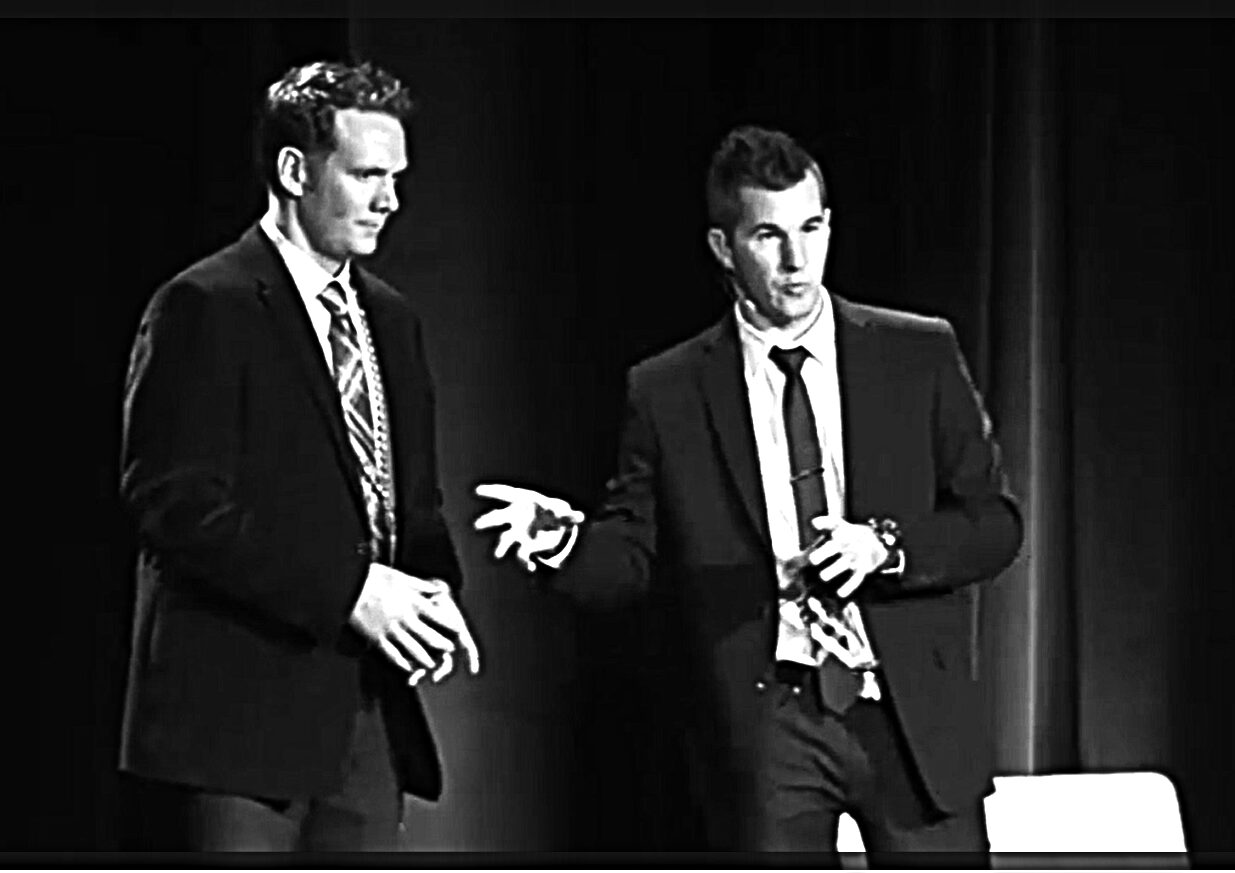
So it was that the last speaker takes the stage, and launches into a fiery warcry for what he called “the ultimate freedom business.” I was all ears.
“Software!”
Wait…
Subscription software, he continued.
Are you kidding.
Without learning to code, he said. By hiring developers to do everything, he said.
A million business models, and I sneak into an event where they’re covering the most niche one, that I scientifically determined best, at the exact time I needed it most.
After explaining the formula he teaches, and success stories of his students, he closed with a dramatic pause, reared back with the mic, and cried:
“This isn’t about software, it’s about freedom!”
I imagined lightning raining down, but it probably didn’t.
I went home and signed up for his course. It was $5,000. And it was the single largest purchase I’d ever made.
College, except you make money at the end
Let’s recap every way my back was against the wall at this point:
- Significant % of life savings invested in a course.
- Approaching middle age.
- Whole world mocking me and saying I’ll fail.
- Still living in a Sorority Row crawlspace.
- No Plan B.
This had to work.
I fixated on the course like it was an escape map from Death Row. I watched every video ten times. I printed the transcripts and studied like scripture. I did every exercise with the intensity of a pilot diffusing a cockpit bomb.
Copywriting. Choosing profitable software ideas. Validating the ideas before bringing it to market. Sketching the product for developers. Hiring a developer. And more.
My crawlspace was so bleak, I turned the nearest Starbucks into my war room.
(Later I would meet an ex-employee of that Starbucks. “Everyone there hated you.” she said. “They wanted to close, and you were always last to leave.”)
The world turned against me even more than before. If you want to elicit pre-recorded stock responses from the W2 class tuned to maximum condescension, tell them you spent $5,000 on a “course.”
You spent $80,000 on an anthropology degree. STFU.
At this point, I’d dealt with enough mockery that my attitude towards the hivemind had turned from defensive to contemptuous. Under the pretext of concern and “being realistic,” the wage slaves worked overtime to beckon me back to their slavequarters—always with an undertone of “when your little experiment fails, you’ll be back anyway…” I didn’t need more fuel, but proving them wrong was a mission of existential proportions.
I closed the hatch. Things like sunlight, human contact, and coming up for air were all faded memories from a past life.
My list of product ideas was whittled down to one. Details are irrelevant (and boring), but it solved one specific problem, for a deeply niche business. Would anyone buy it? I don’t know. I skipped the “validating your idea” part of the course. I decided to charge $97 a month.
I bought a sketch pad at the art store and drew out the interface. I had no idea what I was doing.
Four months in, I had to pull the trigger. I hired a developer. He was $100 an hour. If this didn’t work, it was over for me.
I was all in.
Three weeks later, I had a working prototype.
I made a crude website. Set up an email autoresponder for new signups. Made a sales video with a $40 mic. I was making everything up as I went.
Using a small email list of leads I’d assembled, I invited potential customers to a live webinar where I’d debut my tool. I’d never done a live presentation.
Trying to invoke a sense of scarcity, I thought people would only sign up if spots were limited. So at the end of the webinar, I opened up 100 spots at $97 a month.
The developer bill had hit $14,000. It would be another year of pulling books from dumpsters to recoup my depleted savings.
I was all all all in.
It sold out in 90 seconds.
Day one, and I had a six figure business.
I smashed capitalism (now she won’t stop calling)
Six months later my software was doing $30k a month. I’d recouped the cost of the course and developer in 60 days. Every day when I woke up, I had an extra $1,000+ in my bank.
Then it hit $40k/month.
For two years, revenue stayed flat around $450,000 a year. I answered every customer service email. I managed developers. I did all the marketing (almost none). I put out every fire (many).
It was more money than I could spend, but I wouldn’t know. My only lifestyle upgrade was to get out of Sorority Row Crawlspace into marginally more dignified arrangements four blocks away. In the top 2% of income, and I was running everything from a $300 used laptop.
With organic growth and no advertising costs, I did something every MBA would consider sacreligious: I put every dollar that came in right into my pocket. No “reinvesting in the business.” That was for adults with business acumen. I, on the other hand, had no such confidence. Certain everything would collapse the next day, I pocketed every dollar.
The money was coming in so fast, I didn’t even look at it. Around the 3 year mark, I was sitting in Starbucks and had a feeling. I logged into every checking, saving, & brokerage account I never logged into, untangled every password reset email and, for the first time, patched my financial landscape together. After adding it all, I had a net worth number. Four days earlier, I had become a millionaire.
(At this point, ticker-tape-parade-level acknowledgement must go to the silent hero of all of this: my developer. He kept the pirate ship afloat, stepped up in every emergency, and pulled the business from the existential doom over and over. Absolute legend.)
When my net worth hit $1.5m, I bought a house in cash. My prolific career of vagrancy, and illegal / substandard housing was over. Still certain everything would collapse at any moment, I decided if I walked away from this with $1 million in cash and a paid-for house, that was pretty cool.
But I had bigger plans.
Feels illegal but whatever
After two flatlined years at $40k a month, something happened. Revenue started to climb. And I didn’t know why. Because my business was 12 spinning plates and half dozen fires run by one man pushed to the limits of multi-tasking, when revenue lurched to $50k a month, I had no idea why. I didn’t track my traffic sources, no Google Tag manager was installed, there was no user onboarding poll. Just a $10k a month raise, and a shrug. No time to ask “why.” Back to business.
In a couple weeks, it climbed to $60,000 a month. Then $70k. Then $80k. That $5,000 course was now a $1 million a year business. I considered that a pretty good return on my investment.
Then revenue hit $100,000 a month. As a prolific criminal, I was qualified to say: This felt illegal.
Revenue peaked at $120,000 a month. Everything always felt like “the top.” But $4,000 a day really felt like the top.
Maybe a good time to sell, but I had one more power move to pull. Something too ambitious to actually work, but if I didn’t try, I would always wonder.
For four years, I had saved every feature suggestion from every subscriber that sounded halfway sane. What if I built an upgraded version of my software with a ton of these features, limited it to 300 subscribers, and charged $3,500?
I sold 235 spots, and made $800,000 in one day.
(Then I did it again the next year).
I like the idea of leaving situations while they’re still good. In six years, I’d turned a fake conference pass into $6.5 million in sales.
Time for the final act: The “liquidity event.”
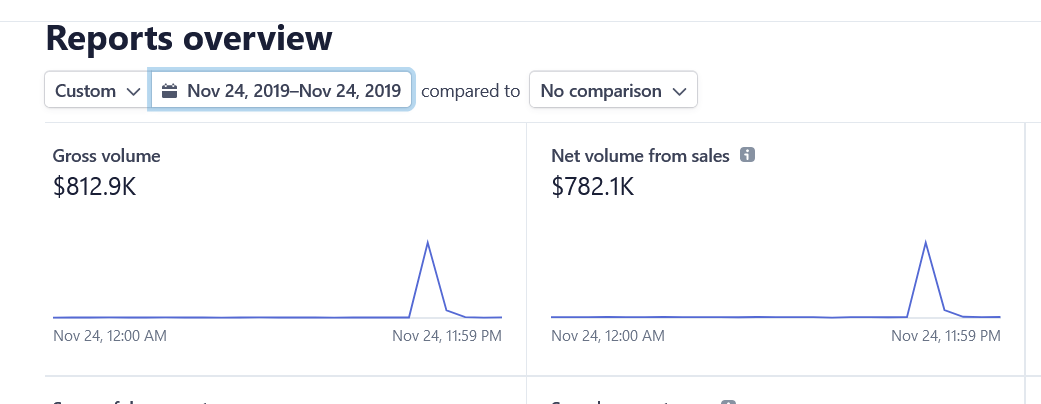
Leaving your world not with a bow, but with arson (the seeds of liberation will be sown in its charred remains)
Here’s how you sell your duct-taped, bootstrapped, weird niche tech business for millions.
Step One: Create a pitch deck. At this point I’d learned you can fake and Google your way through anything. So I found a slide deck for some other tech company that sold for some insane amount of money, and copied it. “Here’s my revenue, here’s my customer retention stats, etc etc. Please buy me.”
Step Two: Find a broker. I took my pitch deck to a “merger & acquisitions broker.” If you think I had some mentor guiding me through this, I didn’t. I found my guy because he was on Shark Tank once.
Step Three: Get a lawyer. The worst part.
Step Four: Wait. The broker shops your business around.
Step Five: Impress potential buyers on Zoom calls. My whole strategy here—which happened to be 100% effortless due to its accuracy—was to emphasize how clueless I was. “I stumbled my way to $100k a month. Imagine how much more your Big Business Brain could do.”
Step Six: Sign an LOI. A potential buyer submits a “Letter of intent.” This is where it gets serious. They’re ready to close, pending nothing weird turns up during “due diligence.”
This is also the first time they throw a number out. Business valuations can vary wildly, and there is no objective formula. The LOI valued my business at $4.5 million.
This was lower than expected, but not by much. Through this journey, my valuation had taken a beating. Starting from an early estimate of $8 million, the value dropped as various defects and red flags were uncovered—each the result of me having no idea what I was doing.
My mind wasn’t on a “fair” valuation. It was on my Exit Number—that “2.5% Rule” figure that ensured I’d never have to work again.
I looked at my current net worth, did napkin math on $4 million minus taxes, a “thank you” check to my developer… $4m put me well above my exit number. Let’s go.
“They Googled You”
Just before the finish line, things went sideways.
Maybe I didn’t mention this, but due to my colorful “eco-terrorist” Google footprint, I was running the entire business under a fake name. A little terrorism never killed anyone, but you never know what people will think.
When I signed the “letter of intent,” it was the first time the buyer had seen my legal name. Within hours, I get a call from my broker.
“They Googled you.”
A phrase I usually hear from a woman who just got off the phone with her parents. Only the stakes here were higher.
“What’s the damage?” I asked.
“They’re nervous. I’ll see what I can do.”
<Calls back an hour later>
“Get this: someone on their executive team is a vegan. They understood your….crimes. And put the executive team at ease. Deal is on.”
Back to selling your weird business for millions…
Step Seven: Due Diligence. This is where they tear through your books, your code base, and even the customer service email inbox, looking for trouble. I already told them it was a mess. So their expectations were low. No issues.
Step Eight: The “asset purchase agreement.” The final contract. Sign and you’re done.
Purgatory
There was nothing simple or linear about the weeks that followed. Lawyers argued. Assets were disputed. Proposals and counter-proposals were volleyed.
Whatever was going to happen was either going to lead to ruin or glory. And I knew exactly where I wanted the best or worst day of my life to be: Madison, Wisconsin.
The reason wasn’t that deep. I’d spent six months in jail there awaiting trial 15 years prior. So to me, Madison was about purgatory. A place I awaited decisions affecting the rest of my life. First by a federal judge. And now, a private equity firm.
Mostly it was a lot of waiting. I filled the days pacing State Street, allowing the reflection I’d denied myself during the last six years of 14 hour work days. How this journey had imploded every relationship. Hijacked every priority. Postponed every dream.
Which gave way to more reflection, about the real “why” behind this ridiculous era. My sanitized, party-friendly, public-facing answer (“To have the freedom to live in hotels”) obscured motives that were darker. Memories of sitting in the Madison jail, unsure how to cover mounting lawyer costs; vowing to make it my mission when I got out to always have money for the best legal defense. Or needing to build my life into something every FBI agent who hunted and imprisoned me would envy, and getting the last laugh over my tormentors. Or silencing every smug critic across two decades who told me the “Militant Unemployment Experiment” would fail.
I booked a room at the Hilton, and waited. The jail where I was held for trial was two blocks west.
Exit
It was noon on August 12th when I received the broker’s text.
“Check your inbox.”
The Docusign had landed.
The seven figure wire notification pinged, and it meant nothing. The thousands of late nights in Starbucks were not vindicated. My net worth doubling with one click wasn’t a win. Only one thing would trigger a victory lap.
Around the hotel room were estimates from tax experts I’d hired. Broker contracts. The various people who were owed a cut, legally and otherwise. Napkin math was checked and double checked.
When all the smoke cleared—2% over my Exit Number.
Never a slave
A vow to the grave
Carved beneath his name
“Here lies a man who beat the game.”
End experiment.
Dedications
- Luxury Jones for bullying me into reading that Anthony Robbins book
- The rich guy who mocked me in front of my date in the LAX Embassy Suites hot tub
- The ex-girlfriend who basically called me a loser during our breakup call
- The other ex-girlfriend who floated me while I built the failed soy milk maker business. When I exited I wired her $5k as a thank you. She didn’t respond
- The other ex-girlfriend who put up with me when I was built my business and made me a cake on launch day
- The entire septum ring class for being such insufferable haters that I would set myself on fire for a thousand eternities just to prove you wrong (done)
- Every person with “eat the rich” in their bio for being such perfect contrarian indicators that anyone could build a fruitful life just basing every decision on observing you and doing the opposite
- My developer for being so consistent, supportive, and indispensable over the whole journey
- The FBI for being so bad at their job that I stayed free for 7.5 years (have a blast working until you’re 65 and dying soon after with your subsistence-level pension)
- The Unemployed Vegan Straightedge (IYKYK)
- Everyone who said it couldn’t be done